Raleigh is the state capital and the center of Wake County, with older neighborhoods such as Oakwood, Mordecai, Five Points and Hayes Barton close to downtown, postwar ranch streets inside the Beltline, and newer subdivisions spreading out toward I-540.
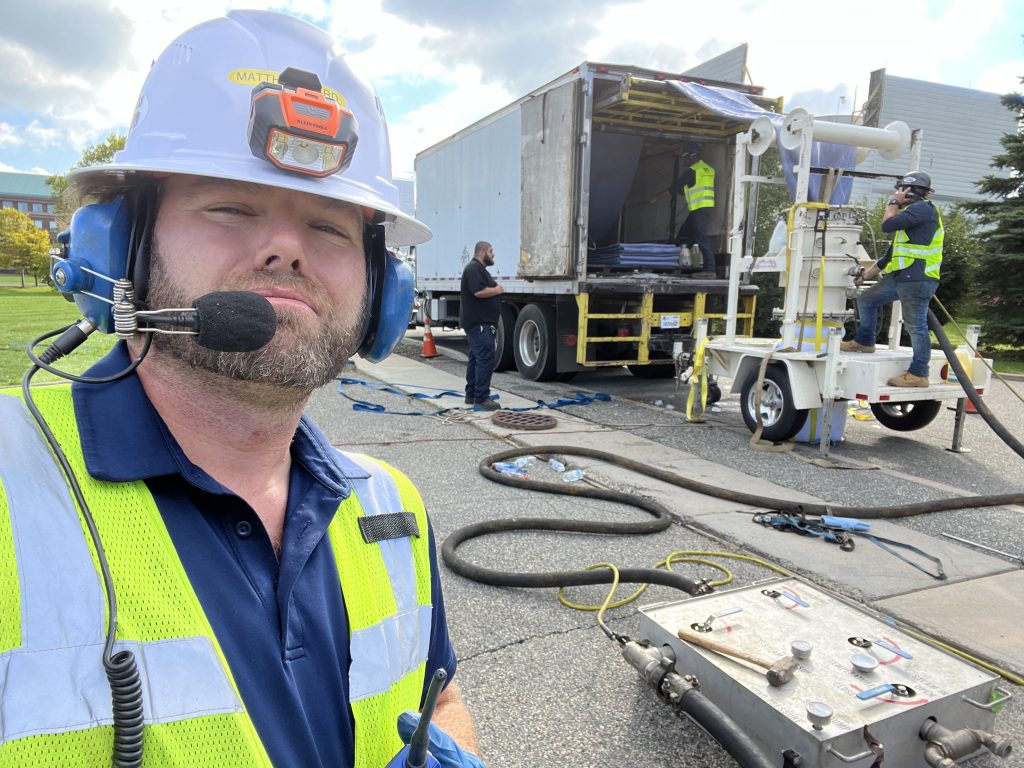
Inside the Beltline, a lot of houses still drain through clay or cast iron laid decades ago, and the big willow oaks that shade those streets send roots into every joint they can find. Since 2001, Trenchless Today has repaired lines like these without opening the whole yard, and Raleigh is part of the Wake County area we cover.
Our North Carolina regional shop is in Selma, a short drive from Raleigh.
Fixing Raleigh Sewer Lines Without a Trench
Pipe Lining (CIPP)
For a pipe that still holds its shape, a cured-in-place liner turns cracked clay or scaled cast iron into one continuous pipe. The cleanout can be in the yard, at the foundation or in a crawlspace. Pipe lining details.
Pipe Bursting
For a section that has lost its shape, we replace it with new HDPE pulled through the old path. Pipe bursting details.
Hydro Jetting and Drain Cleaning
High-pressure water cuts out root masses and grease so the line flows and the camera can see the pipe clearly. Hydro jetting.
Camera Inspection
A camera on a push cable shows the pipe material, the depth and every defect along the run, and you keep the recording. About camera inspections.
Why Sewer Lines Fail in Raleigh
Clay pipe under mature oaks
Older streets near downtown have clay laterals with joints every few feet, and the oak roots overhead find them.
Piedmont red clay
The dense clay soil swells when it is wet and shrinks in a dry summer, which can pull joints apart and create low spots that hold water.
Cast iron in midcentury homes
Ranch houses from the 1950s and 1960s often have cast iron that has scaled and cracked from the inside.
Why Skip the Trench in Raleigh
An open dig in Raleigh can mean cutting through a mature front yard, a brick walk or a driveway on a tight in-town lot. Lining from a cleanout leaves the yard and the trees alone.
- Access through a cleanout or one small pit in most cases.
- Driveways, walks, patios and landscaping usually stay put.
- The cured liner has no joints for roots and does not corrode.
Reasons to Call Us in Raleigh
- Financing is available for larger repairs.
- Since 2001 we have repaired sewer lines without trenching the whole yard.
- Plain-language walkthrough of the inspection video.
- 50-year life expectancy on the liner and a 10-year warranty on the job.
- Crews across our territories, including Raleigh.
Other Places We Work Near Raleigh
Close to Raleigh: Garner, Cary, Knightdale and Morrisville. All of Wake County is covered, and you can find the full list on our North Carolina service areas page.
Call About Your Raleigh Sewer Line
We will schedule the inspection and explain what the video shows in plain terms. Call (866) 926-2329 or contact us online.
Frequently Asked Questions
Do you cover all of Raleigh, inside and outside the Beltline?
Yes. We take calls from older neighborhoods near downtown as well as North Raleigh, Brier Creek and the newer areas out toward I-540.
Do you serve the towns around Raleigh?
Yes. Cary, Garner, Knightdale, Wake Forest and the other Wake County towns each have their own page, and our Wake County page lists them all.
What are the signs of roots in a sewer line?
Gurgling toilets, several slow drains at once and backups that return a few months after cleaning are the usual signs. The camera shows where the roots are getting in.
How long does a typical lining job take?
It depends on the length of the line, how much cleaning it needs and how many connections have to be reopened. We give you a schedule after the inspection.
Will you always recommend a liner?
No. Some lines only need a thorough jetting. If the camera shows the pipe is sound, we will tell you that.