Cary grew from a small railroad town into one of the largest communities in Wake County, and most of its homes sit in planned neighborhoods built from the 1970s on, with the older blocks clustered around downtown Cary and Academy Street.
Many of those neighborhood sewer lines are now old enough for settled joints and root intrusion, and HOA landscaping, irrigated lawns and paver driveways make a dig expensive to put back. Since 2001, Trenchless Today has repaired lines like these without opening the whole yard, and Cary is part of the Wake County area we cover.
Trenchless Today runs its North Carolina regional shop out of Selma, in Johnston County.
How We Repair Sewer Lines in Cary
Lining a Cracked or Rooted Pipe
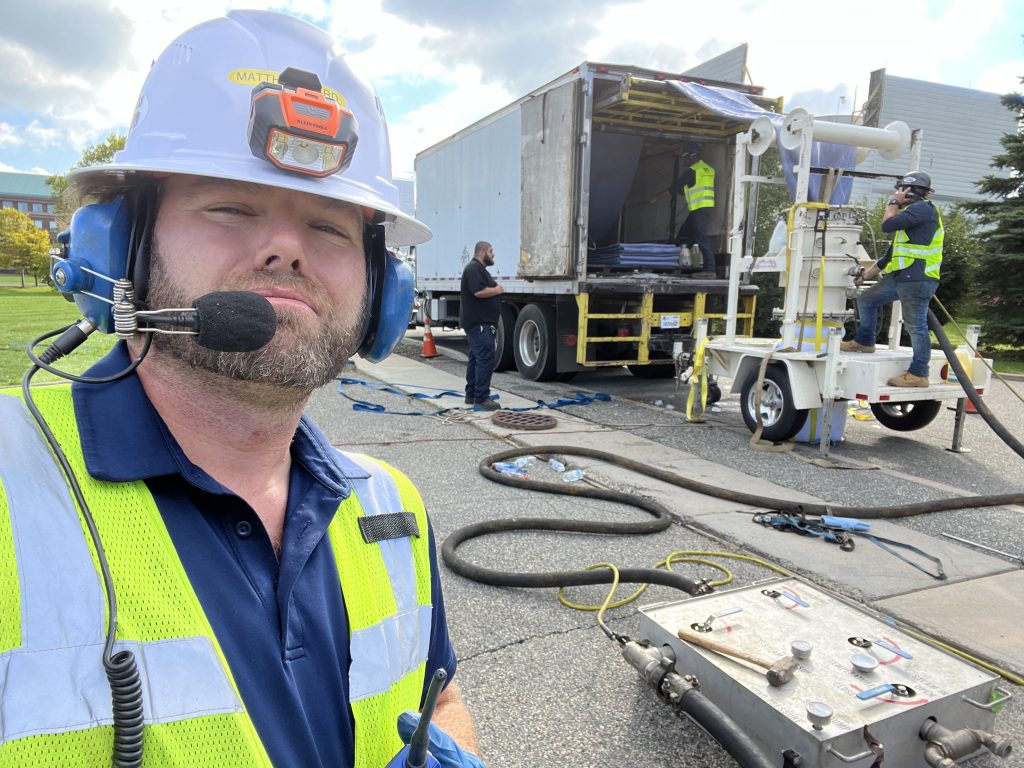
For a pipe that still holds its shape, a cured-in-place liner turns cracked clay or scaled cast iron into one continuous pipe. The cleanout can be in the yard, at the foundation or in a crawlspace. Pipe lining details.
When There Is Not Enough Pipe to Line
Bursting fractures the failed pipe outward and draws a new line through the same route, so there is no trench along the whole run. More on pipe bursting.
Clearing the Line
High-pressure water cuts out root masses and grease so the line flows and the camera can see the pipe clearly. Hydro jetting.
Recorded Video
A camera on a push cable shows the pipe material, the depth and every defect along the run, and you keep the recording. About camera inspections.
Sewer Trouble We See in Cary
Aging subdivision laterals
Neighborhoods from the 1970s and 1980s are reaching the age when joints open and roots move in.
Irrigated lawns and roots
Sprinklers keep the soil moist and tree roots active right where the lateral runs.
Clay soil movement
Wet and dry cycles in the red clay can shift pipe and leave bellies that collect waste.
Trenchless Repair vs. Excavation in Cary
Excavating a lateral in Cary often means tearing up sod, irrigation lines and landscaping, and sometimes a paver drive. Lining from a cleanout keeps the yard as it is.
- Access through a cleanout or one small pit in most cases.
- Driveways, walks, patios and landscaping usually stay put.
- The cured liner has no joints for roots and does not corrode.
Working With Trenchless Today in Cary
- Financing is available for larger repairs.
- More than two decades of lining and bursting, starting in 2001.
- Plain-language walkthrough of the inspection video.
- Our crews cover every territory we serve, and Wake County is one of them.
- A 10-year warranty backs the work, and the liner is rated for a 50-year life expectancy.
Also Serving
Nearby, we also work in Morrisville, Apex, Raleigh and Holly Springs, and the rest of Wake County. Browse all North Carolina service areas.
Ready When You Are in Cary
We will schedule the inspection and explain what the video shows in plain terms. Call (866) 926-2329 or book an inspection.
Frequently Asked Questions
Do you work in Cary neighborhoods with HOA rules about yard work?
Yes. Because lining works from a cleanout, there is usually little or no change to the yard, which makes it easier to work within neighborhood rules.
Do you also serve Morrisville and Apex?
Yes. Both border Cary and have their own pages.
Do you work on apartments and commercial buildings?
Yes. We line sewer and drain lines in multifamily buildings, offices, restaurants and other commercial property as well as houses.
My house is on a crawlspace. Can you still line the sewer?
Usually, yes. We work from a cleanout in the crawlspace, at the foundation or in the yard. If there is no usable cleanout, we can add one at a single point.
What are the signs of roots in a sewer line?
Gurgling toilets, several slow drains at once and backups that return a few months after cleaning are the usual signs. The camera shows where the roots are getting in.