Troy is a tight, hilly city on the east bank of the Hudson, and a lot of its housing still shows its age. Lansingburgh, South Troy, the blocks around downtown and the older streets climbing away from the river were built when clay tile and cast iron were the ordinary sewer materials. Those laterals now run under stoops, brick walks and yards that barely have room for a trench.
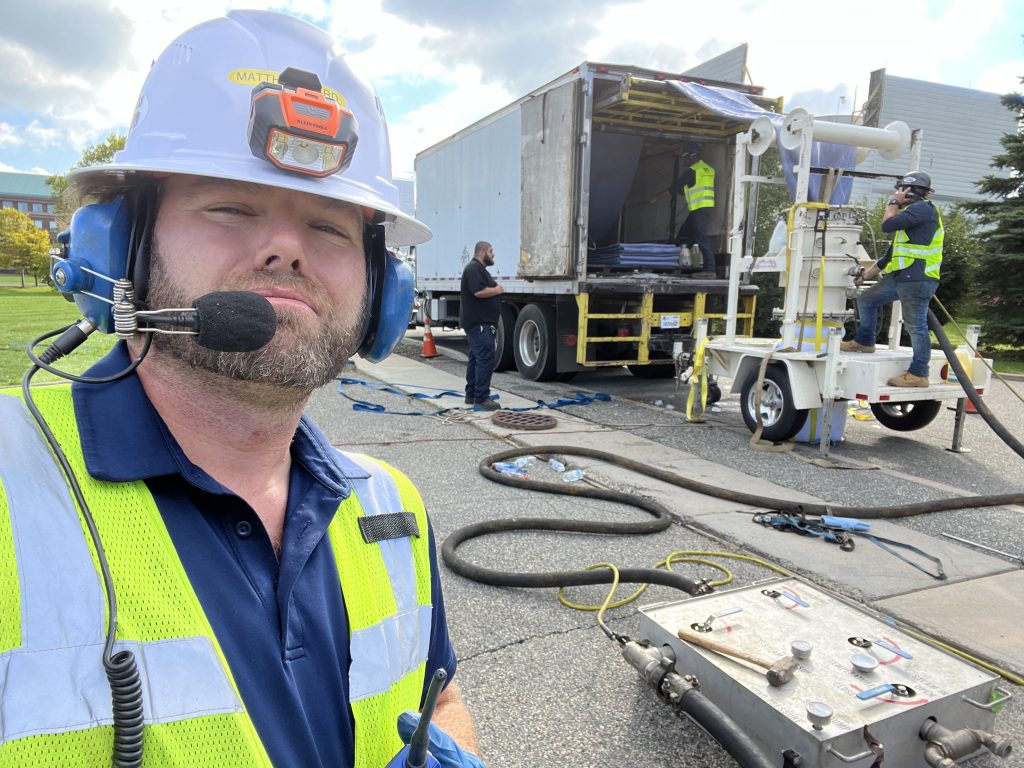
Trenchless Today has been doing trenchless sewer repair since 2001. Our Capital Region crew works Troy regularly, relining and repairing laterals from the inside so a sidewalk on a narrow lot does not have to come out.
A resin-saturated liner is placed inside the existing Troy lateral and cured into a continuous, jointless pipe. That seals root paths, cracks and separated clay joints. Most installs start at a basement cleanout. How trenchless pipe lining works.
When a stretch of the line has already collapsed, pipe bursting can pull new HDPE along the old path from small access pits. A short, isolated failure may only need a point repair. About pipe bursting.
High-pressure water cuts roots and strips grease and scale from the full diameter of the pipe. In Troy, jetting is often the first move before lining, and sometimes it is the only work the camera says you need. Learn about hydro jetting or our drain cleaning service.
We record the inside of the lateral and review the footage with you, so the repair recommendation is based on the pipe you actually have. About sewer camera inspection.
Short-section clay pipe has a joint every few feet, and each one can shift or open a path for roots. Cast iron lasts longer at first, then rusts from the inside, builds scale and finally splits along the bottom.
Many Troy laterals drop toward the river under a stoop, a shared wall or a neighbor’s fence. That is a poor place to excavate, and it is exactly where roots and frost movement show up first.
Capital Region winters drive frost deep into the ground. Repeated freezing and thawing moves soil enough to crack brittle pipe and pull joints apart, especially on laterals that have already been in the ground for a century.
Older parts of the city still rely on combined sewers. Heavy rain can surcharge the street system; a partly blocked house lateral is then more likely to unload into the basement.
Opening a trench here often means breaking sidewalk, working between close buildings and putting hardscape back when the pipe work is done. Trenchless lining and bursting are done through a cleanout or small access points, which is why they fit this city so well.
Building owners and commercial properties in Troy can use the same methods on larger lines. See commercial pipe lining.
Troy sits in Rensselaer County. Just south and across the river, we also handle East Greenbush and Albany. For the rest of the county, start at the Rensselaer County sewer repair page, or see all of upstate New York.
Slow drains on more than one floor, a basement floor drain that burps during storms, or roots that return after snaking are signs the lateral needs a closer look. Call (518) 374-1010 or request an inspection online. No Digging. No Damage. Just Solutions.
Usually, yes. Many Troy homes have a basement cleanout on the main line. We clean the pipe, inspect it with a camera, and install the liner from there, so the sidewalk, stoop or narrow side yard can stay in place.
Parts of Troy still use combined sewers that carry stormwater and sewage together. When a storm loads the street system, a lateral already narrowed by roots, scale or a sag is more likely to back up into the basement. A camera inspection shows whether your line is part of the problem.
The liner we install in Troy is rated for a 50-year life expectancy, and the installation is covered by a 10-year warranty. It does not rust, and it has no joints for roots to work through, which matters under Troy’s older streets.
Jetting scours roots, grease and scale off the pipe wall so the line flows again. Lining repairs the pipe itself by curing a new pipe inside the old one. We often jet first; lining is the step that keeps the problem from coming back through the same crack or joint.
Yes. The same Capital Region crew serves Albany, as well as East Greenbush, the city of Rensselaer and the rest of Rensselaer County.

We offer pipe lining as the preferred method of trenchless pipe restoration. This no-dig process involves deploying a liner and bonding it to the host pipe for a like-new sewer line.
When sewer problems are suspected, we use professional sewer video inspections to see inside the pipe and locate blockages, cracks, root intrusion, and other damage. This allows us to accurately diagnose issues and recommend the most effective repair solution without unnecessary digging.
Our crew removes common drain obstructions, including grease, solid waste, food debris, and foreign objects. Drain cleaning eliminates foul odors and restores the efficient removal of wastewater from plumbing fixtures.
Underground and in-slab HVAC ducts can rust, crack and take on water. We line them from the inside to seal them and extend their life.
As the trusted name when it comes to trenchless technology, we fix extensive sewer line damage with cured-in-place pipe lining. This process strengthens the pipe, and it only requires one day for service restoration.
Our electrical conduit relining protects your facility from electrical damage. The lining process extends the conduit’s lifespan and improves electrical efficiency.
Improper placement or curing of a liner leads to failure. We remove failed liners with steam and replace them with a new, properly installed pipe liner.
Minerals in the water crystallize and create a thick scale in pipes. Our thorough descaling process removes the obstruction and restores correct water pressure and water flow through the pipe.
When a sewer line has extensive damage incompatible with a repair, our trenchless certified installer uses pipe bursting. With our trenchless equipment, we simultaneously remove the old pipe and pull a new one into place.
We offer pipe lining as the preferred method of trenchless pipe restoration. This no-dig process involves deploying a liner and bonding it to the host pipe for a like-new sewer line.
When your sewer line has tree root intrusion, corrosion, and other damage, we address it with trenchless sewer pipe restoration. Our sewer repairs stop leaks and prevent additional damage.
Our crew removes common drain obstructions, including grease, solid waste, food debris, and foreign objects. Drain cleaning eliminates foul odors and restores the efficient removal of wastewater from plumbing fixtures.
Underground and in-slab HVAC ducts can rust, crack and take on water. We line them from the inside to seal them and extend their life.
As the trusted name when it comes to trenchless technology in New York, we fix extensive sewer line damage with cured-in-place pipe lining. This process strengthens the pipe, and it only requires one day for service restoration.
Our electrical conduit relining protects your facility from electrical damage. The lining process extends the conduit’s lifespan and improves electrical efficiency.
Improper placement or curing of a liner leads to failure. We remove failed liners with steam and replace them with a new, properly installed pipe liner.
Minerals in the water crystallize and create a thick scale in pipes. Our thorough descaling process removes the obstruction and restores correct water pressure and water flow through the pipe.
When a sewer line has extensive damage incompatible with a repair, our trenchless certified installer uses pipe bursting. With our trenchless equipment, we simultaneously remove the old pipe and pull a new one into place.