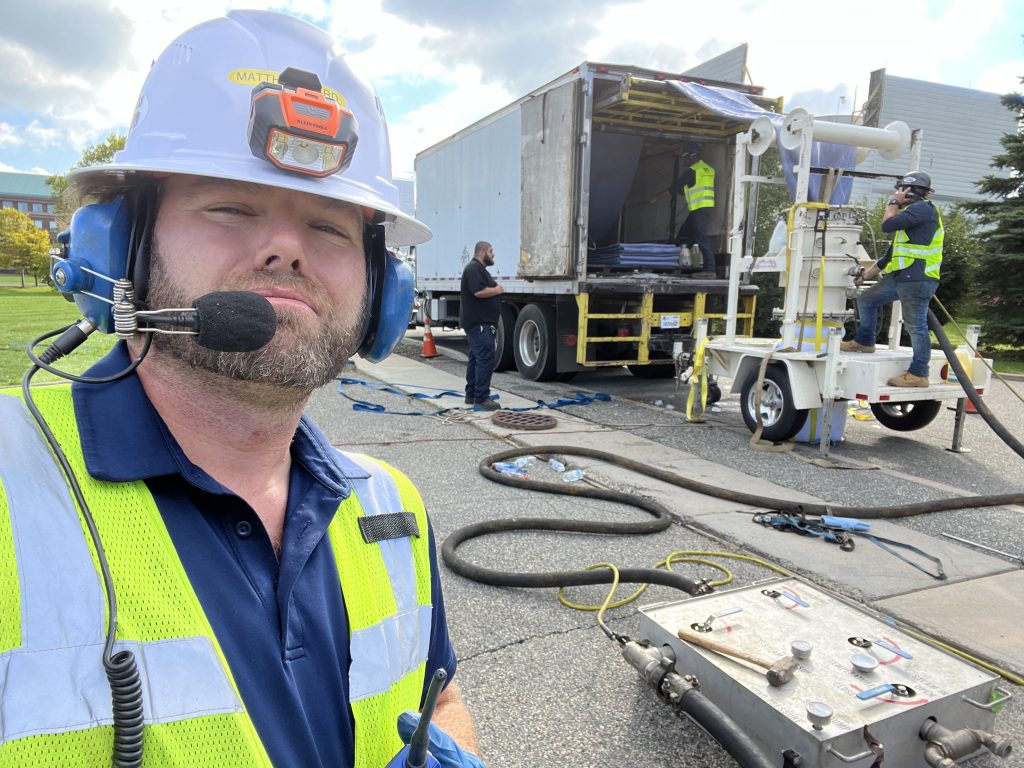
Staten Island, officially Richmond County, is the most residential of the five boroughs, from the older neighborhoods around St. George, Tompkinsville and Stapleton through the mid-island communities to the South Shore.
A large share of the housing is one- and two-family homes with laterals under driveways and lawns. Older North Shore streets still have clay and iron pipe; mid-island and South Shore neighborhoods have laterals that are now at mid-life. Call (929) 484-2329.
What Trenchless Today Does in Staten Island
Pipe Lining (CIPP)
We install a resin liner that cures in place and turns a cracked clay or cast iron pipe into a seamless new one. In most homes we work from the basement or an outside cleanout. Trenchless pipe lining.
Pipe Bursting
Collapsed or badly broken sections can be replaced by bursting, which pulls new HDPE pipe through the old path. Pipe bursting.
Hydro Jetting
Roots, grease and scale come off under high-pressure water. Hydro jetting is also our first step in drain cleaning calls that keep coming back.
Sewer Camera Inspection
We show you the footage and explain it in plain terms before any repair is discussed. Camera inspection.
Why Sewer Lines Fail in Staten Island
North Shore clay and iron
The older harbor neighborhoods often still drain through original laterals that crack and open at the joints.
Mid-island and South Shore pipe
Postwar and later houses have lines that are now old enough for roots, sags and repeat backups.
Trees and wet ground
Mature yard trees and low or wet soils can shift joints and let groundwater into a cracked line.
Trenchless Repair vs. Excavation in Staten Island
Digging on Staten Island often means opening a driveway or a front lawn, then putting it back. We line from a cleanout whenever the pipe is still in place.
- We work through a cleanout or a small access point.
- Driveways, walks, walls and lawns stay in place in most cases.
- The cured liner has no joints for roots to get through, and it does not rust.
Why Call Trenchless Today in Staten Island
- In business since 2001 and focused on trenchless repair.
- Our crews work in every territory we serve, Staten Island included.
- 10-year warranty on the job; the liner is rated for a 50-year life expectancy.
- You watch the inspection video with us.
- Financing options for bigger repairs.
Managing an apartment building, school or commercial property? See commercial pipe lining.
Where We Work in Staten Island
We take calls throughout Staten Island.
We also take calls from St. George, Stapleton, New Dorp, Great Kills, Tottenville, Eltingville and the rest of the island. See also our New York City overview. Nearby areas: Brooklyn, Manhattan and Queens. Or see all of our New York service areas.
Book a Sewer Camera Inspection in Staten Island
Slow drains all over the house, a gurgling toilet, sewage odor in the basement or a backup that keeps coming back are signs the main line needs a look. Call (929) 484-2329 or request an inspection online.
Frequently Asked Questions
Do you serve the whole island?
Yes. This page covers Richmond County, which is Staten Island, from the North Shore to the South Shore.
Which number should I call?
Use (929) 484-2329, the New York City number.
How long does a sewer liner last?
The liner we install is rated for a 50-year life expectancy, and the work comes with a 10-year warranty. It does not rust and has no joints for roots to get through.
Does every damaged line need a liner?
No. Some lines only need thorough hydro jetting. If the camera shows the pipe is sound, we will tell you that.
Can you fix a liner another company installed?
Yes. We remove and replace failed or badly installed liners, and we can inspect one first to see what went wrong.