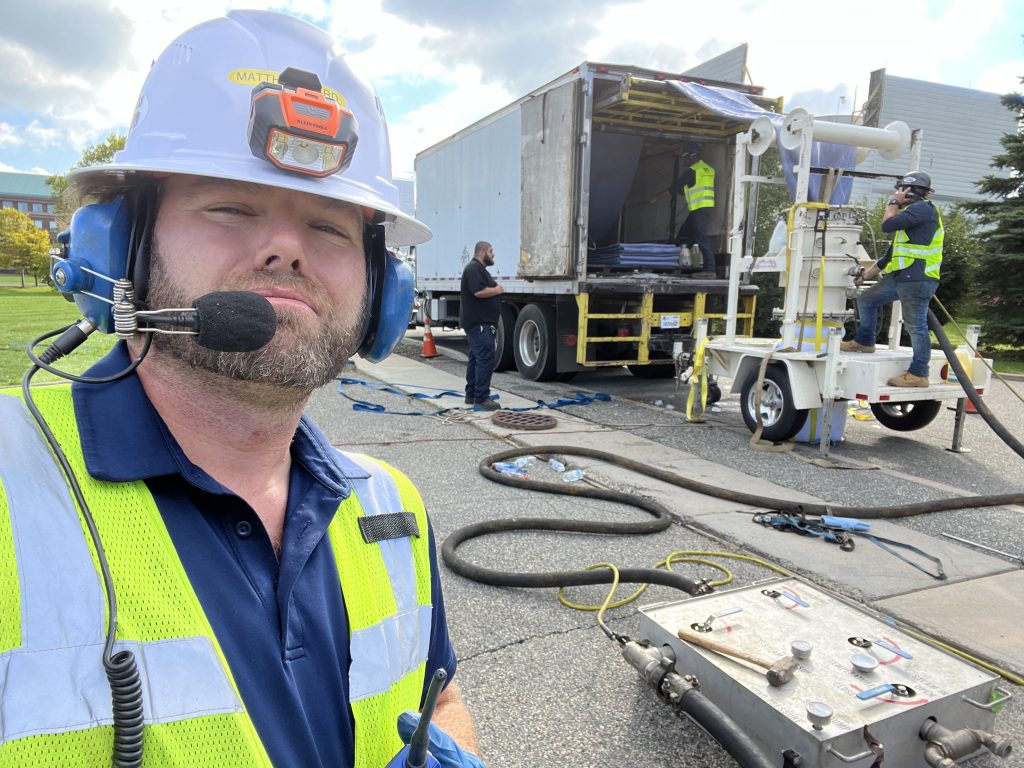
Lackawanna County is centered on Scranton and the Lackawanna Valley, with older city wards, hillside streets, and boroughs and townships such as Clarks Summit, Dunmore and Dickson City.
Housing from the anthracite years and the decades that followed still depends on original laterals that have to climb grades, sit under tight lots and deal with hard winters. Those lines now crack, scale and take roots.
Sewer Services We Offer in Lackawanna County
Cured-in-Place Pipe Lining
A resin-soaked liner is inverted into the old pipe and cured until it hardens into a new, jointless pipe. It seals cracks, offset joints and root holes, and it usually goes in through an existing cleanout. How pipe lining works.
Pipe Bursting
Where a stretch of pipe has collapsed, a bursting head breaks the old line apart and pulls new HDPE pipe in behind it, from one small pit to another. Pipe bursting.
Hydro Jetting
Water at high pressure cuts roots and scours grease and scale off the pipe wall. Every liner starts with a jetted pipe, and some lines need nothing more. Hydro jetting and drain cleaning.
Video Camera Inspection
We record the inside of the line and review it with you, so you can see the cracks, roots or sags for yourself. Sewer camera inspection.
Why Sewer Lines Fail in Lackawanna County
Older city and borough laterals
Scranton and the nearby boroughs have blocks of early housing where clay joints have opened and iron has corroded.
Hills and frost
Sloped streets and a long winter move soil around brittle pipe and pull joints apart.
Abington and the upland towns
Clarks Summit and the surrounding townships have a mix of mid-century houses and longer runs that sag or back up after cleaning.
Trenchless Repair vs. Excavation in Lackawanna County
A Lackawanna excavation can mean a cut on a hillside driveway in Scranton or a front yard in Clarks Summit. Lining from a cleanout avoids most of that restoration.
- We work through a cleanout or a small access point.
- Driveways, walks, walls and lawns stay in place in most cases.
- The cured liner has no joints for roots to get through, and it does not rust.
Why Lackawanna County Property Owners Choose Trenchless Today
- Trenchless sewer repair since 2001.
- Crews in all of our territories, including Lackawanna County.
- A 10-year warranty on the work and a liner with a 50-year life expectancy.
- Honest camera calls. If cleaning fixes it, we tell you.
- Failed liners corrected. We remove and replace liners that other companies installed badly.
- Financing is available.
Towns We Serve in Lackawanna County
We serve communities throughout Lackawanna County. These pages cover the places our customers call from most:
We also take calls from Dunmore, Dickson City, Archbald, Throop, Carbondale, Moosic and Clarks Green. Nearby areas: Monroe County. Or see all of our Pennsylvania service areas.
Get Started in Lackawanna County
A camera inspection tells you what is wrong and what it will take to fix it. Call (484) 548-2329 or book online.
Frequently Asked Questions
Do you work outside the city of Scranton?
Yes. We cover Lackawanna County, including Scranton, Clarks Summit and the boroughs and townships around the valley.
Can you work on a line on a sloped lot?
Yes. The camera shows whether lining, bursting or cleaning is the right repair, and a liner does not require an open trench down the hill in most cases.
Can you fix a liner another company installed?
Yes. We remove and replace failed or badly installed liners, and we can inspect one first to see what went wrong.
Can the liner go in from inside the house?
Usually. Most homes have a cleanout on the main line, often in the basement or just outside the foundation, and we clean, inspect and line the pipe from there.
What if part of the pipe has collapsed?
A liner needs a pipe to line. Where a section has collapsed, pipe bursting or a short spot repair at that point may be the better option, and the camera shows which.