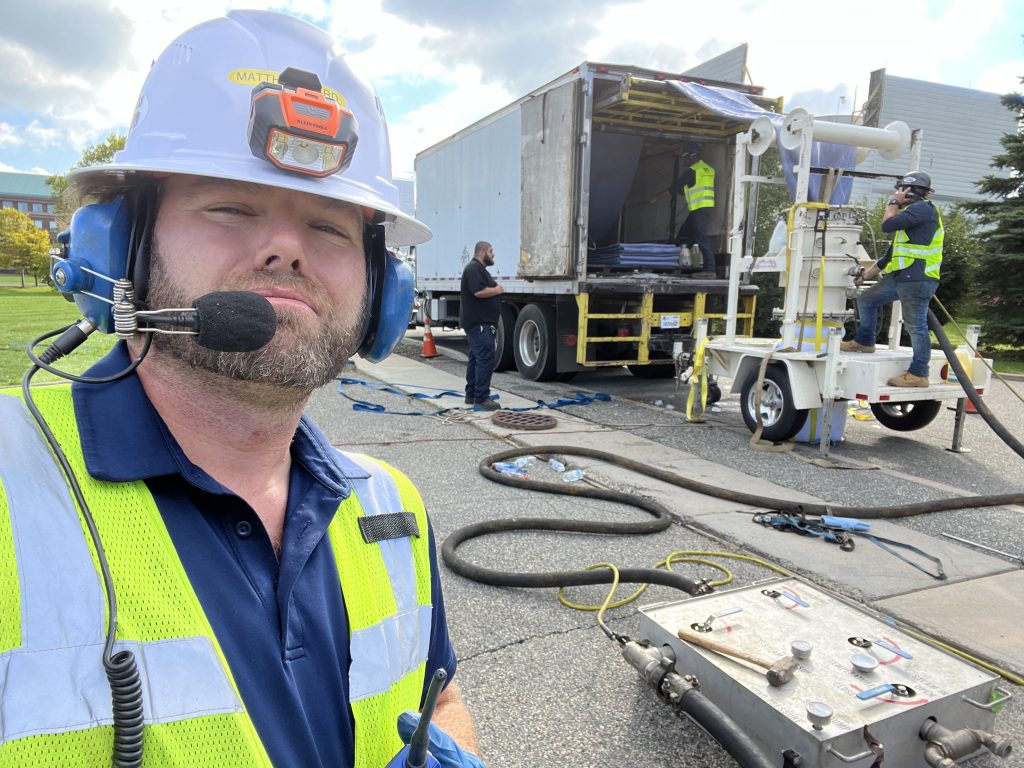
Lamoille County sits north of the capital region, in the mountain valleys around Stowe, with village streets, resort and year-round houses, and laterals that often run a long way under lawns, drives and trees.
Stowe is the place our customers in this county call from most. The neighboring towns, including Jeffersonville and Morrisville, are covered from the Stowe page and this county hub.
Sewer Services We Offer in Lamoille County
Cured-in-Place Pipe Lining
A resin-soaked liner is inverted into the old pipe and cured until it hardens into a new, jointless pipe. It seals cracks, offset joints and root holes, and it usually goes in through an existing cleanout. How pipe lining works.
Pipe Bursting
Where a stretch of pipe has collapsed, a bursting head breaks the old line apart and pulls new HDPE pipe in behind it, from one small pit to another. Pipe bursting.
Hydro Jetting
Water at high pressure cuts roots and scours grease and scale off the pipe wall. Every liner starts with a jetted pipe, and some lines need nothing more. Hydro jetting and drain cleaning.
Video Camera Inspection
We record the inside of the line and review it with you, so you can see the cracks, roots or sags for yourself. Sewer camera inspection.
Why Sewer Lines Fail in Lamoille County
Village and resort laterals in Stowe
A mix of older village pipe and longer runs to houses set back off the road, both of which show roots, sags and freeze stress.
Frost, ledge and trees
A long winter and shallow soil over rock move brittle pipe, and mature trees find every open joint.
Seasonal and year-round properties
A line that sits lightly used, then takes a sudden load, will show every sag and open joint. A camera inspection is the way to see what is going on.
Trenchless Repair vs. Excavation in Lamoille County
A Lamoille County excavation can mean a long trench across a lawn or a cut through a driveway that is hard to restore after a freeze. We line from a cleanout whenever the pipe is still in place.
- We work through a cleanout or a small access point.
- Driveways, walks, walls and lawns stay in place in most cases.
- The cured liner has no joints for roots to get through, and it does not rust.
Why Lamoille County Property Owners Choose Trenchless Today
- Trenchless sewer repair since 2001.
- Crews in all of our territories, including Lamoille County.
- A 10-year warranty on the work and a liner with a 50-year life expectancy.
- Honest camera calls. If cleaning fixes it, we tell you.
- Failed liners corrected. We remove and replace liners that other companies installed badly.
- Financing is available.
Towns We Serve in Lamoille County
We serve communities throughout Lamoille County. These pages cover the places our customers call from most:
We also take calls from Jeffersonville, Morrisville and the neighboring Lamoille County towns. Nearby areas: Chittenden County and Washington County. Or see all of our Vermont service areas.
Get Started in Lamoille County
A camera inspection tells you what is wrong and what it will take to fix it. Call (866) 926-2329 or book online.
Frequently Asked Questions
Do you work in Stowe and the rest of the county?
Yes. Stowe has its own page, and we also take calls from Jeffersonville, Morrisville and the rest of Lamoille County.
Can you work on a second home or a seasonal property?
Yes. We inspect first and recommend lining, bursting or cleaning based on the footage.
Can you fix a liner another company installed?
Yes. We remove and replace failed or badly installed liners, and we can inspect one first to see what went wrong.
Can the liner go in from inside the house?
Usually. Most homes have a cleanout on the main line, often in the basement or just outside the foundation, and we clean, inspect and line the pipe from there.
What if part of the pipe has collapsed?
A liner needs a pipe to line. Where a section has collapsed, pipe bursting or a short spot repair at that point may be the better option, and the camera shows which.